
Powful, Steady, Safe
First-class transformer manufacturer in China
- Extended Operational Lifespan
- Minimized Energy Losses
- Enhanced Grid Safety
- Total Cost of Ownership (TCO) Reduction
- CE/UL Certificated
Larger Capacity, Better Price.
Annual production up to 50,000 pcs & lower wholesale price.
Lower MOQ, More Flexibility.
Save you more and generate higher profitability with 1 set.
Certified Products, Safety Guaranteed.
Compliance of CE and UL, strictly production to guarantee quality.
Our featured prodcuts
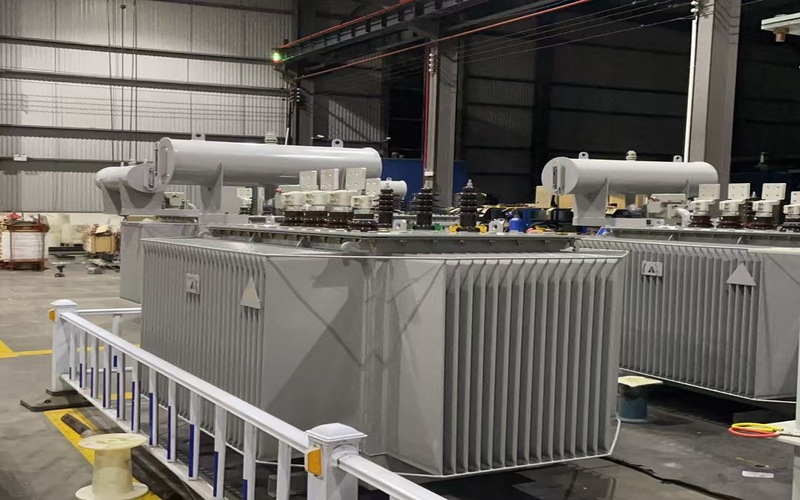
Power Transformers
High-voltage power transformers are the backbone of long-distance energy transmission. Built to handle massive electrical loads, these units step up voltage at the generation source to minimize line losses across the grid and step it down safely at regional substations.
- Primary Function: Bulk power transmission and grid stabilization.
- Voltage Focus: High to ultra-high voltage ratings.
- Common Settings: Generation plants, transmission grids, and large transmission substations.
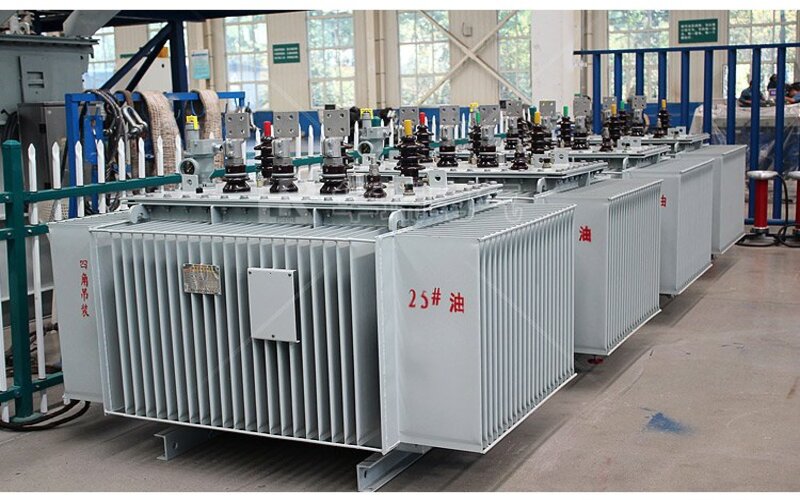
Distribution Transformers
A distribution transformer handles the final stage of electrical delivery. These units step down medium voltage from local lines to safe, usable levels for end consumers. We manufacture these in two primary configurations based on your installation needs:
| Configuration Type | Common Applications | Key Benefits |
|---|---|---|
| Oil-Filled | Overhead poles, outdoor pads, suburban grids | Excellent heat dissipation, long outdoor lifespan |
| Dry Type | Indoor commercial buildings, hospitals, schools | Fire-safe, minimal maintenance, no fluid leaks |
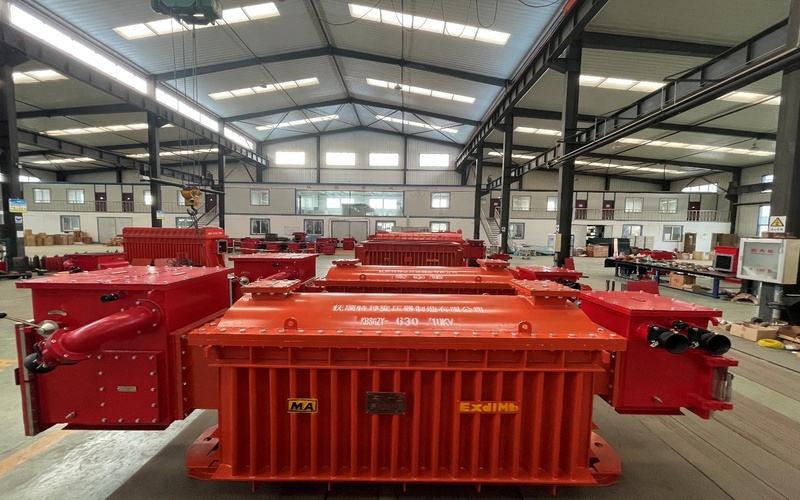
Specialty Transformers
Standard equipment won’t cut it for harsh industrial environments or fluctuating renewable inputs. We engineer custom specialty units to handle irregular load profiles and unique grid connections.
- Renewable Energy: Custom units optimized for solar farms and wind turbines, managing variable generation profiles.
- Data Centers: High-efficiency transformers designed for clean, continuous power and harmonic mitigation.
- Industrial Plants: Heavy-duty rectifier and furnace transformers built to withstand massive current fluctuations in steel, mining, and chemical processing.
Core Components and Materials in our Transformer Manufacturing
Building a reliable power or distribution transformer starts with choosing the right components. Every material we select directly impacts the unit’s efficiency, thermal limits, and overall lifespan under heavy grid loads.

Essential Raw Materials: Steel, Copper, and Aluminum
The foundation of high-quality transformer manufacturing relies on premium metals. We choose these raw materials based on the specific power requirements and budget of the project:
- Silicon Steel: High-grade, grain-oriented silicon steel is non-negotiable for the magnetic core to keep energy losses low.
- Copper: The gold standard for winding material in heavy-duty power transformers due to its superior electrical conductivity and mechanical strength.
- Aluminum: A lightweight, cost-effective alternative frequently used in medium voltage distribution transformers without sacrificing performance.

Magnetic Core Materials and Laminations
The core assembly is the heart of the transformer. To maximize efficiency and prevent heat buildup, we do not use a solid block of metal. Instead, we stack ultra-thin sheets of laser-cut steel.
| Feature | Core Specification | Benefit |
|---|---|---|
| Material | Cold-Rolled Grain-Oriented (CRGO) Steel | Maximum magnetic permeability |
| Structure | Multi-layered thin laminations | Drastically reduces eddy current losses |
| Design | Step-lap joints | Lowers noise levels and no-load losses |

Insulation Materials and Dielectric Fluids
High voltages require robust insulation systems to prevent catastrophic short circuits. We use a combination of solid barriers and specialized cooling fluids to keep the system stable.
- Solid Insulation: Premium pressboard, Nomex paper, and resin matrices wrap the windings to provide high mechanical and dielectric strength.
- Oil-Filled Systems: Mineral oils or biodegradable synthetic esters act as both a dielectric fluid and a heat-transfer medium.
- Dry-Type Insulation: For indoor or high-risk environments like data centers, we utilize cast resin or vacuum pressure impregnation (VPI) instead of liquids.
Get 10% discount for you first order
The Transformer Manufacturing Process: Step-by-Step
Building a reliable power or distribution transformer requires extreme precision at every stage. We break down our core transformer manufacturing process to show exactly how we build efficiency and durability into every unit.

Step 1: Design and Engineering Specifications
Every project begins on the drafting board. We customize the design specifications to meet exact grid requirements, voltage ratios, and environmental conditions.
- Electrical Simulation: Modeling magnetic fields and thermal behavior.
- Material Selection: Choosing the optimal grades of electrical steel and conductor types.
- Mechanical Modeling: Structuring the frame to withstand short-circuit forces and shipping stress.
Step 2: Core Assembly and Precision Winding
The core and the windings are the heart of the transformer. We use high-grade, grain-oriented silicon steel for the core assembly to keep energy losses at an absolute minimum.
Core Lamination: Laser-cut steel sheets are stacked precisely using a step-lap joints method to reduce noise and no-load losses.
Precision Winding: Copper or aluminum conductors are wound into tight coils. We utilize specialized winding machines to ensure perfect tension, which prevents internal electrical shorts under high medium voltage stress.


Step 3: Tank Fabrication and Cooling System Integration
The internal components need a rugged, protective home. We fabricate heavy-duty steel tanks designed to house the core-coil assembly and support the cooling systems.
| Fabrication Phase | Key Operations | Purpose |
|---|---|---|
| Tank Welding | Robotic & manual structural welding | Ensures a completely leak-proof, pressure-resistant enclosure. |
| Surface Treatment | Shot-blasting & multi-layer powder coating | Provides long-term corrosion resistance against harsh weather. |
| Cooling Integration | Mounting radiators, fans, or corrugations | Dissipates heat effectively to protect internal insulation. |
Step 4: Assembly and Vacuum Processing
During final assembly, the active core-coil part is lowered into the fabricated tank. This stage focuses heavily on eliminating moisture, which is the main enemy of transformer lifespan.
- Connections & Busbars: Securely anchoring leads to the bushings.
- Vacuum Drying: The entire unit goes into a vacuum oven to bake out any microscopic moisture trapped in the solid insulation.
- Oil Filling: For oil-filled models, high-grade dielectric fluid is injected under a vacuum to prevent air bubbles, ensuring the internal components stay perfectly insulated and cooled.

Advanced Insulation and Cooling Systems in Transformer Manufacturing
Liquid-Immersed vs. Dry-Type Insulation Methods

We utilize two primary insulation methods depending on your specific environment and application.
- Liquid-Immersed Systems: These units use specialized dielectric fluids or mineral oils to insulate the internal components. Oil-filled designs offer superior thermal efficiency and are the industry standard for high-voltage outdoor applications.
- Dry-Type Systems: Utilizing advanced resin or vacuum pressure impregnation, dry-type units rely on air for insulation. This eliminates the risk of leaks, making them perfect for indoor environments like data centers and commercial facilities.
Natural and Forced Cooling Mechanisms

Managing heat is critical to maintaining grid stability. We engineer our products with both passive and active cooling configurations to ensure maximum equipment longevity.
ONAN (Oil Natural Air Natural)
Method: Passive convection of oil and air.
Best Used For: Standard distribution transformer setups.
ONAF (Oil Natural Air Forced)
Method: Fans push air across external radiators.
Best Used For: Medium voltage units facing peak loads.
OFAF (Oil Forced Air Forced)
Method: Pumps and fans actively circulate oil and air.
Best Used For: High-capacity power transformer installations.
Enhancing Thermal Efficiency and Lifespan

Our transformer manufacturing process prioritizes long-term asset life. Proper thermal management directly prevents winding degradation and protects the core assembly from premature failure.
By utilizing premium raw materials and precise design specifications, we minimize core losses and maximize heat dissipation. This strict focus on thermal efficiency reduces your total cost of ownership and ensures your equipment operates reliably for decades.
Critical Quality Control and Performance Testing in Transformer Manufacturing
We don’t take shortcuts when it comes to reliability. Every unit we build undergoes rigorous transformer manufacturing quality checks before it leaves our facility. This guarantees your equipment performs safely under real-world conditions.


Standard Routine Tests for Transformers
Every single unit undergoes routine testing to verify basic functionality and construction integrity.
- Insulation Resistance Testing: Checks the integrity of the insulation system.
- Winding Resistance Measurement: Ensures the winding circuits are properly connected and free of defects.
- Turns Ratio and Phase Displacement: Verifies the design specifications for voltage transformation are exact.
- Dielectric Strength Tests: Confirms the components can handle operational voltages without breaking down.
Type Testing and Special Performance Verification
For new designs or critical applications like data centers and medium voltage grids, we conduct advanced type testing to validate long-term durability.
| Test Type | What It Verifies | Why It Matters |
|---|---|---|
| Temperature Rise Test | Efficiency of cooling systems | Prevents overheating under full load |
| Short-Circuit Test | Mechanical strength of core assembly | Ensures survival during grid faults |
| Lightning Impulse Test | Resistance to voltage surges | Protects against outdoor weather hazards |
Ensuring Compliance with IEEE and IEC Standards
Our power transformer and distribution transformer units are built to meet or exceed global benchmarks. We strictly align our material selection and final assembly with IEEE and IEC standards. This compliance ensures seamless grid integration and safety for our global customers, minimizing unexpected downtime and optimizing total cost of ownership.
real applcations

Generation plants

transmission grids

large transmission substations

Data Centers

Industrial Plants

solar farms
Secure Your Infrastructure Directly from the Manufacturer
Get high-efficiency transformers customized to your thermal and load specifications. Inquire now for factory-direct pricing and lead times.